Protein A resins gain traction amid expanding monoclonal antibody pipelines
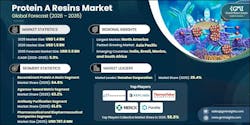
The global protein A resins market is witnessing steady expansion as the biopharmaceutical industry continues to scale up monoclonal antibody and vaccine production. Valued at USD 1.4 billion in 2025, the market is expected to grow from USD 1.5 billion in 2026 to USD 2.5 billion by 2035, registering a compound annual growth rate (CAGR) of 5.9%, according to the latest report published by Global Market Insights Inc. The sustained growth trajectory is supported by rising biologics development, increasing chronic disease burden, and the critical role of protein A resins in downstream purification processes.
A primary driver underpinning market growth is the rising demand for vaccines and therapeutic antibodies. Protein A resins are widely used in affinity chromatography for the selective capture and purification of monoclonal antibodies, making them indispensable in large-scale biopharmaceutical manufacturing. As global demand for antibody-based therapeutics continues to increase—particularly for oncology, autoimmune disorders, and infectious diseases—biomanufacturers are expanding production capacities, directly driving higher consumption of protein A resins.
The increasing prevalence of chronic diseases further accelerates market expansion. Growing incidences of cancer, autoimmune disorders, and inflammatory diseases are expanding biologics pipelines worldwide. This has led to a surge in clinical development and commercialization of monoclonal antibodies, bispecific antibodies, and antibody-drug conjugates, all of which rely heavily on high-performance purification technologies. As a result, the need for efficient, high-binding-capacity protein A resins continues to rise across research, development, and commercial manufacturing stages.
Based on end use, the global protein A resins market is segmented into pharmaceutical and biopharmaceutical companies, contract research organizations (CROs) and contract development and manufacturing organizations (CDMOs), academic and research institutes, and other end users. The pharmaceutical and biopharmaceutical companies segment dominated the market, generating the largest revenue of USD 787.6 million in 2025. This dominance is primarily attributed to their extensive involvement in biologics discovery, clinical development, and large-scale commercial production. Increasing investments in in-house biologics manufacturing facilities and process optimization further reinforce this segment’s leadership.
From a regional perspective, North America dominated the global protein A resins market, accounting for 42.5% of the total market share in 2025. The region benefits from a well-established biopharmaceutical ecosystem, strong R&D infrastructure, and high adoption of advanced biologics manufacturing technologies. The U.S. market is projected to grow significantly, expanding from USD 542.1 million in 2025 to USD 952.4 million by 2035, supported by robust biologics pipelines and sustained investments in oncology research.
The rising prevalence of cancer is a key growth driver for the protein A resins market in the U.S. According to data from the American Cancer Society (2025), approximately 2,041,910 new cancer cases were expected to be diagnosed, with 618,120 cancer-related deaths projected in the country. This growing disease burden has intensified efforts by pharmaceutical companies, biotechnology firms, and research institutions to develop advanced antibody-based therapies, thereby increasing demand for efficient and scalable purification solutions.
Despite favorable growth prospects, the market faces certain challenges, including the high cost of protein A resins and concerns related to resin lifetime and leaching. These factors are encouraging manufacturers to invest in resin optimization, reusable formats, and alternative affinity ligands to improve cost efficiency and process sustainability.
Overall, the global protein A resins market is poised for continued growth over the next decade. As biologics development accelerates, manufacturing scales up, and demand for high-purity antibody products increases, protein A resins will remain a critical component of downstream processing workflows. Ongoing innovations aimed at enhancing resin performance, durability, and cost-effectiveness are expected to further strengthen the market’s role in supporting the next generation of biopharmaceutical therapies.